Pencils
Pencils – The Basics ✏️
A pencil is one of the most basic tools we all know—and one we all started drawing with. Working with pencils is very forgiving and offers a wide variety of results.
Working with pencils is very forgiving and allows a wide variety of results. Let’s start with the basics: the everyday pencil we use for writing is an HB pencil. The letters (H, B, HB) actually indicate the hardness of the lead:
- B Pencils – Softer leads that smudge easily and create a darker, stronger tone. You’ll often find them sold in sets for sketching: 2B, 4B, 6B, and so on. The higher the number, the softer and darker the pencil.
- H Pencils – Harder leads that smudge less and create lighter, grayish tones. If pressed hard, they can be difficult to erase. The number (2H, 4H, etc.) shows the degree of hardness.
- HB Pencil – A balance between the two, making it the most commonly used pencil.
- F Pencil – Slightly softer than HB.
Colored Pencils
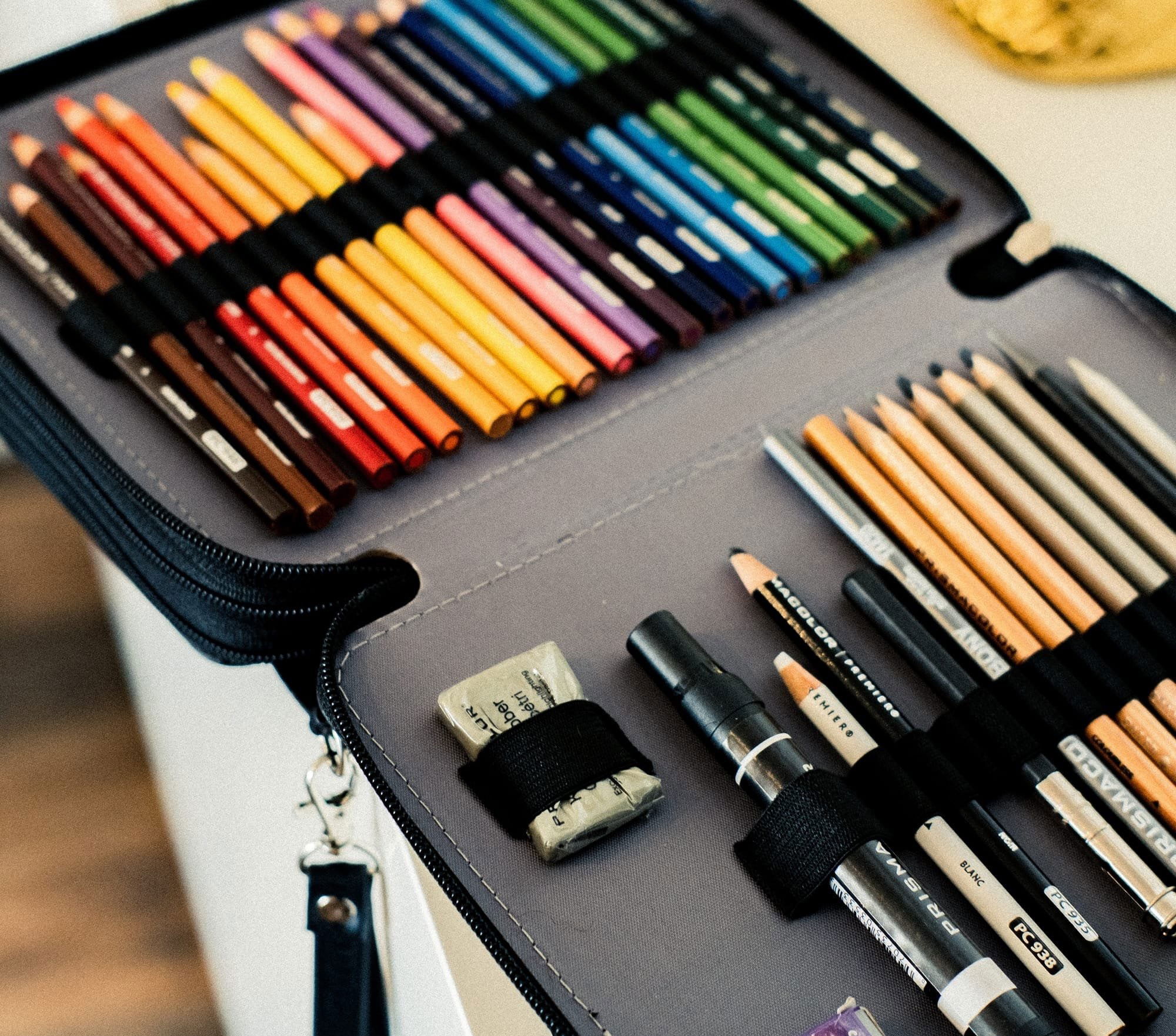
There are countless brands and series of colored pencils, each with unique qualities. Choosing the “best” is often a matter of personal style.
Personally, I enjoy working with Prismacolor pencils. I didn’t realize how much I loved them until I tried another brand and noticed the difference. That said, what works for me may not necessarily be the best choice for you—each artist finds their own preference.
Tip: Don’t drop your pencils! The inner lead can break, causing it to fall out each time you sharpen the pencil.
Watercolor Pencils
These are special colored pencils that can be used with water, giving the effect of watercolor paints—a wonderful way to combine drawing and painting