Watercolor
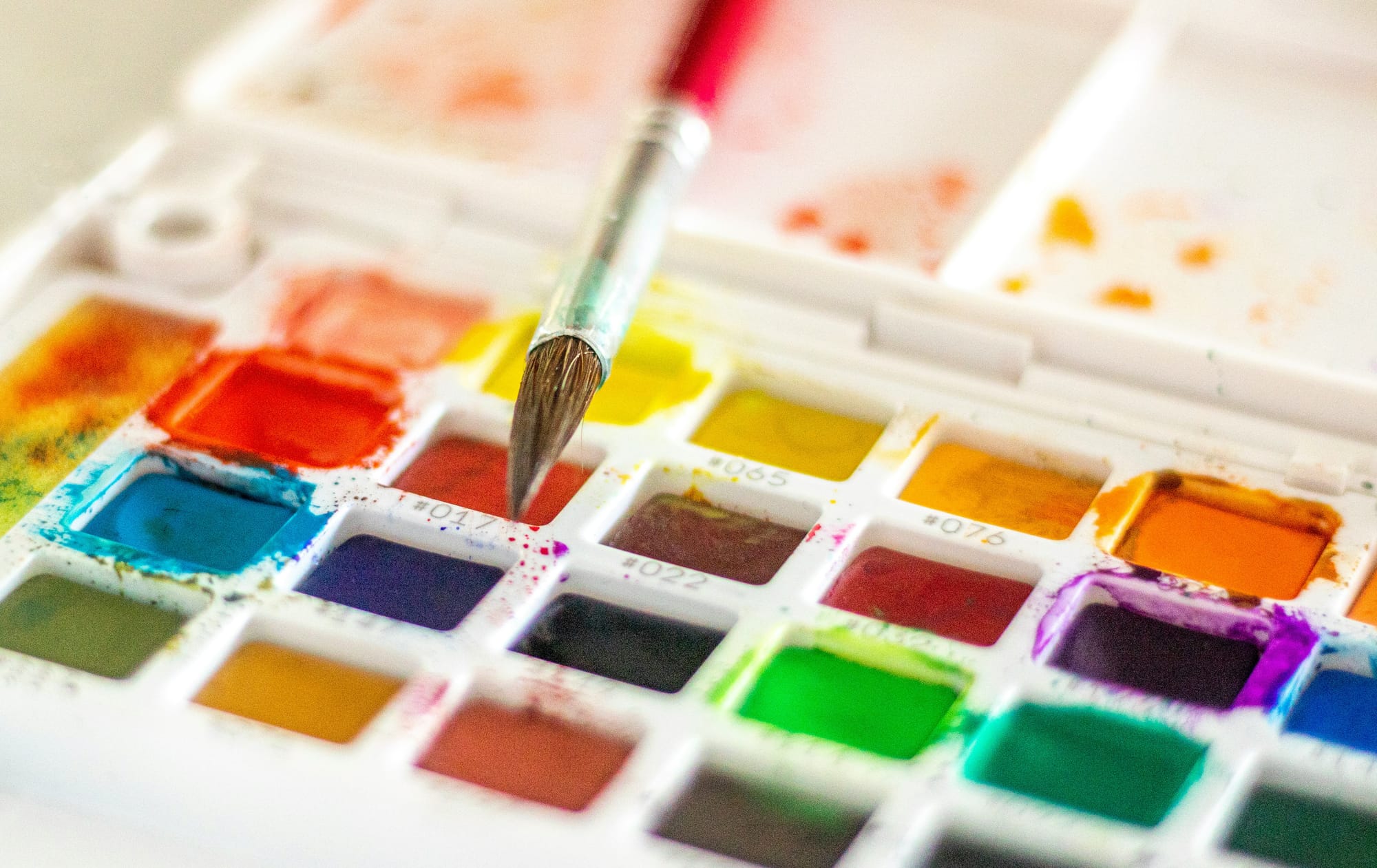
Watercolors
We all know watercolors in the form of palettes—round or square pans that are activated with a wet brush. But professional artists often use watercolors in tubes or liquid form.
Watercolors are light, playful, and versatile. With experience, you can achieve truly impressive results. They dry quickly (which makes them great for outdoor use) and can be reactivated with water, allowing you to work in layers.
They also mix beautifully with other materials. For example:
- Watercolor pencils or silk colors dissolve in water and create watercolor effects.
- Combining with oil paints creates a repelling effect, as oil resists water.
The more water you use, the more transparent the layer will be. With less water, the paint becomes more opaque. You can even pre-wet the paper to create unique textures, or experiment with salt and alcohol for special effects.
Because of their fluid nature, watercolors are excellent for art journaling. Still, too much water can damage the paper—so it’s helpful to blot excess moisture with a paper towel.
Tip: Keep a small spray bottle filled with water. Instead of dipping your brush to wet the paint, lightly spray the palette to keep colors moist while you work.
Brushes for Watercolors
- Soft-bristle brushes – hold water well and allow smooth application.
- Water brushes – special brushes with a refillable water reservoir in the handle, ideal for working outdoors or on the go.