Panda
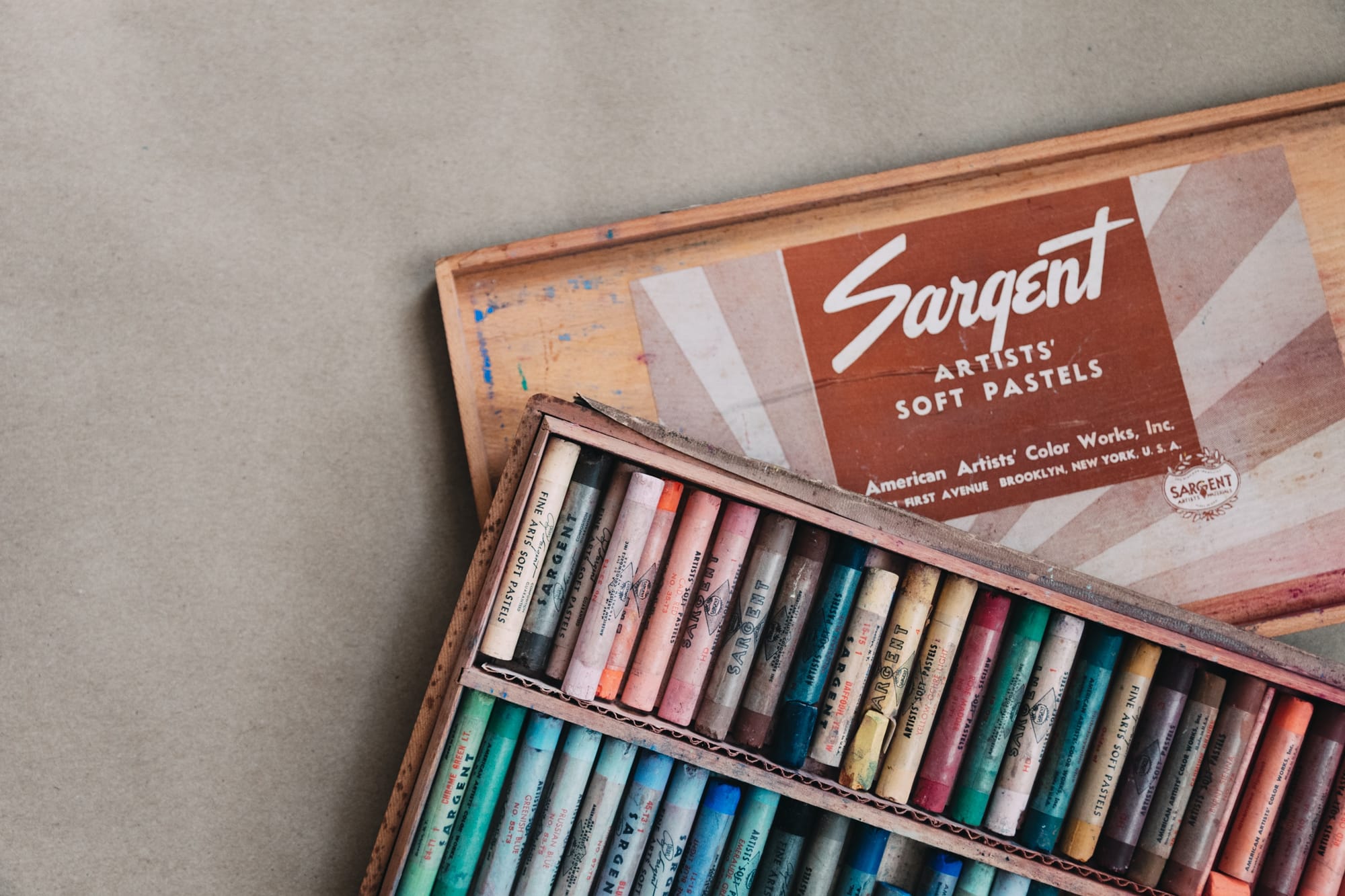
They come in the form of small, colorful sticks soft and flexible that spread across paper or other surfaces with a rich, opaque texture.
Unlike choke pastels, they crumble much less, produce little to no dust, and have an oily consistency that allows for layering and building up color.
A Brief History
Oil pastels were developed in the 1920s by the Japanese company Sakura, which created the Cray-Pas line. The idea was to make a material more accessible than oil paints, suitable for both children and professional artists. They were quickly embraced by modernist artists such as Picasso and Chagall, who appreciated the freedom they provided and the ability to work with vibrant, rich colors without the need for solvents. Since then, oil pastels have become a common tool both in fine art and in art education.
Key Characteristics
- Vivid Colors - The pigment in oil pastels is highly concentrated, resulting in bright, lively outcomes.
- Layering - They can be applied in layers to create depth, though due to their oily texture it can be difficult to build infinite layers and they may become messy.
- Blending & Scraping - Colors can be blended directly on the paper using fingers, a small palette knife, or a stick, and layers can also be scraped away to create textures.
- Surfaces - Work well on textured paper, cardboard, canvas, and even wood.
- Durability - Unlike soft pastels, they are less sensitive to accidental smudging, though it is still recommended to protect them with a fixative spray.
- Portability & Convenience - A small set is easy to carry anywhere, making them popular among artists working outdoors (plein air).
Things to Keep in Mind
- Difficult to Correct - Once a thick layer is applied, it is hard to “erase.”
- Heat & Environment – In high temperatures, oil pastels may soften too much and leave smears.
- Preservation - It’s best to protect finished works with a clear fixative to prevent dust buildup and smudging, or store works with sheets of paper in between to avoid color transfer.
- Mixed Media - Since they are oil-based, combining them with materials such as watercolors, ink, or acrylics can be tricky and not always possible.
It is also important to note that there are many different brands on the market. The higher the quality of the brand, the softer and more powerful the oil pastel will be—though also more prone to smudging.
Creative Tip with Oil Pastels
Heat up a glue gun, spread a line of glue, and then go over it with oil pastels.
You’ll be surprised by the result!